โœจ AI Workforce Infrastructure

Brilliant AI isn't how industries get built.
Organizations are.

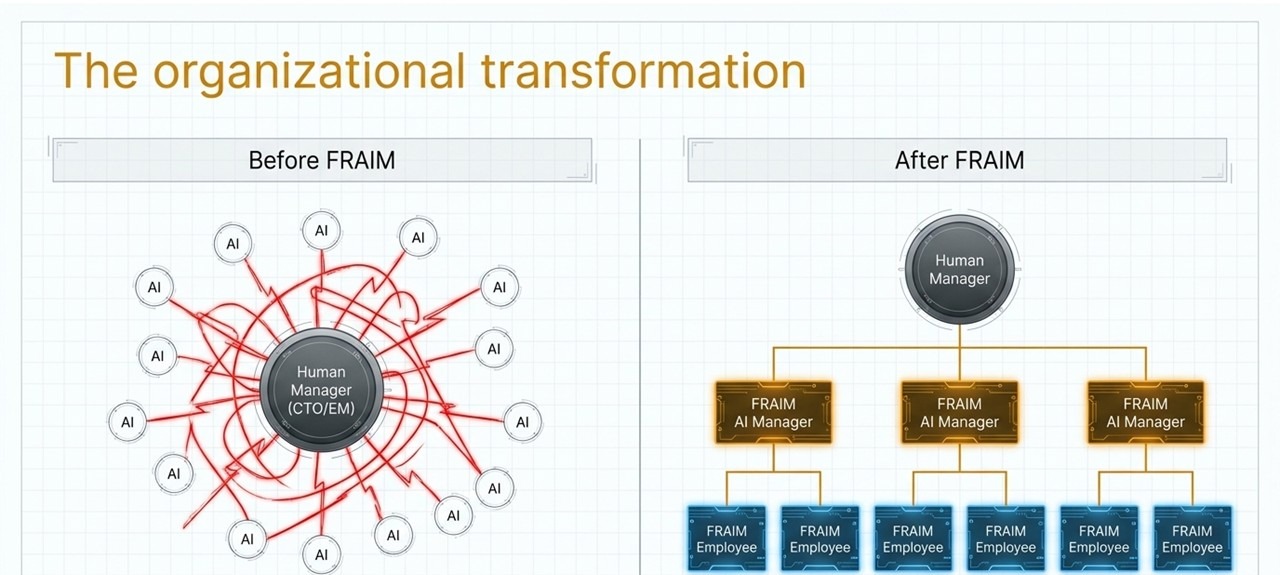
Frontier AI gives you brilliant individual performers. But industry outcomes don't come from individuals โ€” they come from organizations. FRAIM is AI Workforce Infrastructure: it transforms every layer of your AI-powered company. AI agents become an accountable, improving workforce. Their operators become capable AI managers who hold the line on quality, delegation, and evidence. Executives gain clear optics on AI proficiency across the entire organization. Everything a great company runs on โ€” now running your AI workforce.

10x Delivery Velocity
Every Output Verified
Any AI Agent
FRAIM AI Manager
$ npx fraim setup
โœ… AI workforce rules installed
โœ… Workflows configured
โœ… Agents ready for orchestration
$ Agent: "Implementation complete. 47/47 tests pass, evidence provided."

FRAIM works across the full lifecycle for:

The Productivity Paradox

Unmanaged AI creates chaos. Managed AI creates leverage.

95% of enterprise AI pilots fail to move the P&L
21% individual output gain, but flat organizational delivery
154% PR size bloat when AI ships without management
โŒ

Before FRAIM: Chaos

"Implementation complete. Solution looks good."
"I get an error on the first screen."
"What error do you see? Can you write it out for me?"
"C'mon, do this yourself. You've made no progress in 3 hours!"
๐Ÿ”ฅ "Looks good" syndrome
๐Ÿ”ฅ Quality lottery
๐Ÿ”ฅ Agent conflicts
๐Ÿ”ฅ No learning
โœ…

After FRAIM: Excellence

"Implementation complete. Code written, tests created, all tests passing."
Evidence provided:
โœ“ Test output: 47/47 tests pass
โœ“ API tested with curl
โœ“ UI screenshots attached
โœ“ Performance benchmarks met
โœจ Evidence-based validation
โœจ Structured workflows
โœจ Phase-based coordination
โœจ Continuous learning

What is FRAIM?

People often ask: Is it a methodology? Framework? Principles? Product?
The answer: It's all four.

1

Methodology: How You Manage AI Teams

A structured approach to managing AI agents like you'd manage human developers. Just as you wouldn't hire brilliant MIT grads and let them run wild, you shouldn't let AI agents work without structure. Think of it like Agile or Scrum, but for AI teams.

2

Framework: What You Get Out of the Box

Battle-tested components you can use immediately: 50+ pre-built jobs, 100+ reusable skills, proven rules, and templates. You don't start from scratch. You start with what works.

3

Principles: The RIGOR Philosophy

Reviews with evidence โ€ข Isolation between phases โ€ข GitOps as truth โ€ข Observability of agents โ€ข Retrospectives for learning

4

Product: The Implementation

An npm package + AI Mentor system that brings it all together. Works with any AI agent (Claude, Cursor, Windsurf, GPT). Zero vendor lock-in.

The Core: Jobs, Skills, and Rules

๐Ÿ“‹

Jobs

Multi-phase work units like "feature-implementation" or "customer-discovery"

โšก

Skills

Reusable capabilities like "evidence-evaluation" or "spike-first-development"

๐Ÿ“

Rules

Team standards like "mandatory-pre-completion-reflection" or "git-safe-commands"

Enterprise-Grade AI Workforce Infrastructure

The same organizational discipline you'd apply to a high-performing team, applied to AI agents

๐Ÿš€

Full Product Lifecycle

End-to-end workflows from ideation to market launch and beyond

Strategy โ†’ Design โ†’ Build โ†’ Test โ†’ Launch โ†’ Marketing โ†’ Scale
๐Ÿ›ก๏ธ

Agent Integrity

Mandatory evidence collection prevents "fake it till you make it" syndrome

Evidence: Test output showing 47/47 tests pass
๐Ÿงช

Comprehensive Testing

Multi-layer validation with real systems, not just mocks

Database โœ“ API โœ“ UI โœ“ Integration โœ“
๐ŸŽฏ

Spike-First Development

5-15 minute proof-of-concepts before major implementation

10-minute spike โ†’ validate โ†’ build confidently
๐Ÿง 

Complete Product Knowledge

Agents onboarded with your industry, compliance, templates, and company-specific context

Your context โ†’ Agent knowledge โ†’ Better outcomes
๐Ÿ”„

Continuous Learning

Retrospective-driven knowledge capture and pattern recognition

Knowledge accumulates โ†’ patterns emerge โ†’ quality improves
๐Ÿ—๏ธ

Architectural Discipline

Clean separation of concerns with proper boundaries

Clean layers โ†’ proper boundaries โ†’ validation
๐Ÿ”ง

Git Safety

Timeout management and safe commands prevent agent hangs

Non-interactive commands โ†’ timeouts โ†’ log visibility

How FRAIM Works

Transform from builder to AI manager in 4 simple steps

1

Onboard (60 seconds)

Install FRAIM and configure your AI workforce rules

npx fraim setup
2

Delegate

Assign AI agents to structured workflows across the full product lifecycle

Strategy โ†’ Customer Research โ†’ Design โ†’ Build โ†’ Test โ†’ Launch โ†’ Marketing
3

Manage

Continuous improvement through retrospectives, feedback, and learning cycles

Retrospect โ†’ Feedback โ†’ Improve โ†’ Repeat
4

Improve

Don't just ship one-off tasks. Refine jobs, skills, and the systems behind them. Make your AI employees better โ€” and your whole AI organization with them.

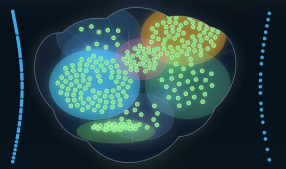
Grow your FRAIM Brain
FRAIM Brain preview showing jobs outside the brain and skills illuminated across internal regions

Proven in Production

Real metrics. Real deployments. Not projections.

Weeks → Days
Delivery cycle compression
Enterprise PM workflows: requirements to shipped prototype in days instead of weeks
10x
Sustained velocity
Managed AI ships production-grade work across engineering, customer dev, marketing, legal
Every
Output has evidence
No "looks good" claims. Structured validation packages on every deliverable
Lean
LLM token usage
Structured workflows keep costs predictable. No runaway agent loops
"We went from "looks good" status updates to evidence packages on every deliverable. The integrity gap closed overnight."
— Enterprise Product Lead

Frequently Asked Questions

Why use FRAIM instead of Claude Code, Cursor, Codex, or other AI tools?

Those tools are excellent execution surfaces. They help an agent write code or complete a task. FRAIM sits above them as the operating layer: a cross-functional job catalog, a manager layer for delegation and review, approval and verification gates, and a learning loop that makes your AI workforce improve over time. Use FRAIM with Claude Code, Cursor, or Codex when you need reliability, consistency, and visibility across the company, not just a faster individual agent session.

What AI agents does FRAIM work with?

FRAIM works with Claude Code, Codex, Cursor, Windsurf, ChatGPT, and future agents. There's zero vendor lock-in. The framework provides the management discipline regardless of which model or host you use.

How quickly can I see results?

Most teams see immediate improvements in code quality and reduced rework within the first week. Full productivity gains (3-10x) typically manifest within 2-4 weeks as teams adapt to the structured workflows.

Is there a free trial?

Yes! FRAIM offers a 14-day free trial on the Self-Serve plan. See the Pricing page for details.

How is FRAIM different from specialist AI products like Vanta, Harvey, or Glean?

Usually those tools are complements, not replacements. Vanta is an evidence pipe, Harvey goes deeper on pure legal work, and Glean is stronger at retrieval. FRAIM is the management and workflow layer that helps your company use AI consistently across engineering, legal, compliance, fundraising, marketing, and ops. If you only need one specialist lane, buy the specialist. If you need one operating model for the whole company, use FRAIM.

Go Deeper

Whitepapers and podcasts on building an AI workforce

Ready to Build Your AI Workforce?

Join builders, teams, and enterprises that turned AI talent into AI organizations

โœ“ Works with any AI agent
โœ“ Zero vendor lock-in
โœ“ Agents with complete product knowledge